Sell More
Win new work. Win back old customers. Chase every quote.
A website that sells, and the marketing a team used to do, drafted for you to approve. We set it up in your own accounts.
- Builder you wantPitch ready to post Ready
- Kitchen quoteSecond follow-up sent Chasing
- Last job a year agoDue for a service Ring
- This month’s emailFrom your own jobs Approve
- A month of postsReady in one sitting Ready
- Adverts, cappedTo people who nearly bought Live
Selling more
The things keeping you up at night.
When the work is on, nobody sells. When it stops, it is too late to start.
- Work comes in fits and starts.
- Quotes go out and go quiet.
- Past customers never come back.
- The customers we want do not know we exist.
- Nobody has time to follow anyone up.
- We miss calls while we are working.
 A quiet week, again
 What AI changed
Selling used to take a team. Now you approve it.
It cuts both ways.
What it brings against you
-
The competition looks busier than you
Posts from real jobs, every week, cost them minutes. Silence reads as closed.
-
Your past customers hear nothing
A monthly email used to need somebody to write it. Now it needs somebody to approve it.
-
The tools assume American law
Consent comes first here, and the fines land on the business, not the software.
The same machine is the fix
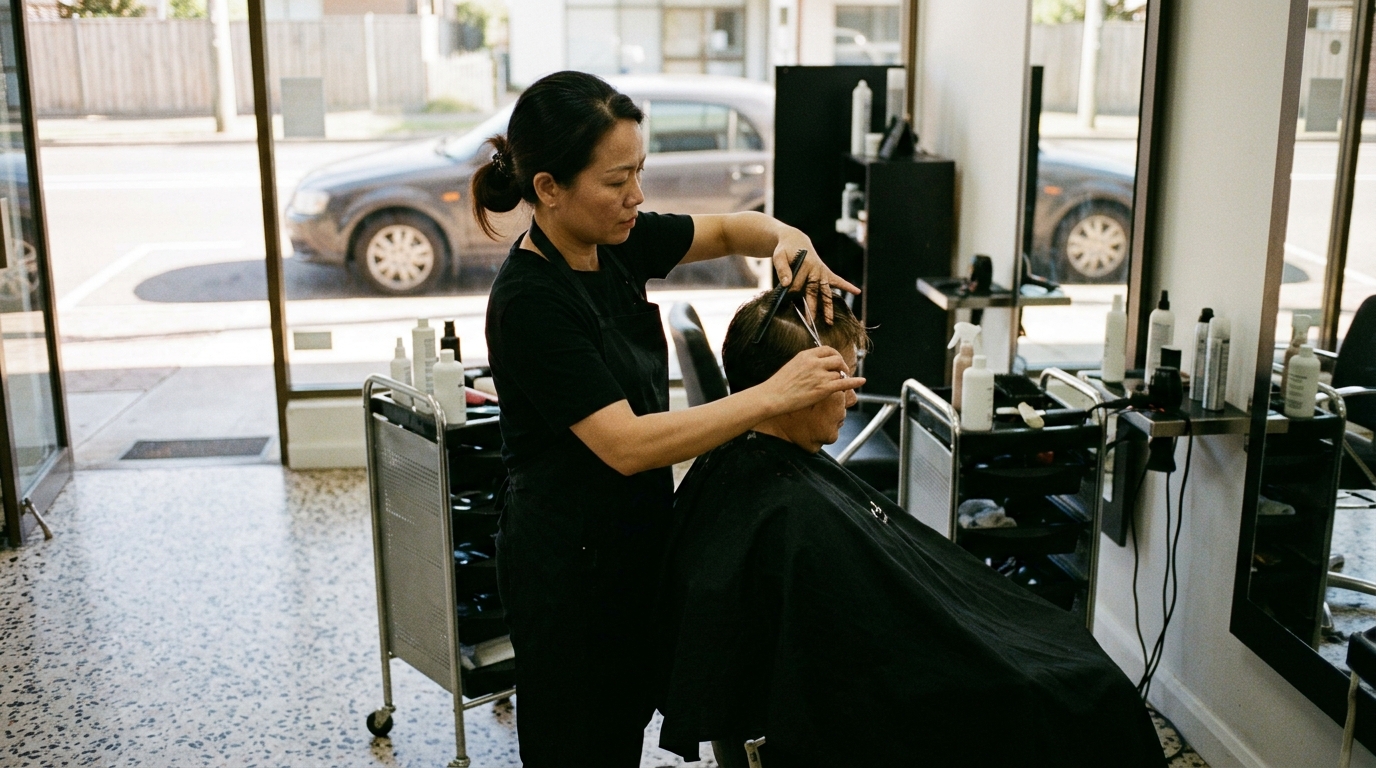
What it opens up for you
-
Be more than one person
The marketing a team used to do, drafted for you to approve.
-
Follow-ups that run themselves
Friendly chasers on every quote, and past customers reminded when due.
-
Answer every enquiry
A text inside a minute when you miss a call, and every enquiry in one list.
-
A website that sells
Pages Google can read, with your prices on them.
-
Marketing every month
A month of posts in one sitting, and adverts shown again to people who nearly bought.
-
Win the work you want
A pitch for each customer you most want, sent the lawful way and followed up.
Where we would start
The Sell More bundle, set up together.
Drawn examples, not client results.
- Google can read itWhat stopped it, fixed Fixed
- Prices on every serviceSo they arrive ready Live
- Call or book from a phoneOne tap on every page Live
- Pages that sellRewritten, with your prices Live
- Missed callWhile you were working Missed
- Text back sentIn words you approved Sent
- They repliedHot water, can you come tomorrow Reply
- Job bookedYou confirmed the time Booked
- Kitchen renovationFriendly follow-up sent Chasing
- Hot water replacementThey replied, chasers stopped Replied
- Deck and pergolaAccepted on their phone Won
- Bathroom regroutFirst chaser due tomorrow Queued
- A month of postsFrom this month’s jobs Approve
- Posting daysSpread across the month Set
- Adverts that follow youShown to people who nearly bought Capped
- Who sees themVisitors and enquiries only Kept
- Kitchen, finishedReview asked for Asked
- Left a great reviewThanked, and asked who else Asked
- Their neighbourRang, sent by them New
- Bathroom, finishedReview asked for Queued
- Spread the payments over 3, 6 or 12 months, interest-free, depending on the size of the work.
- Three months’ support is included, the AU$499 starter too. After that it’s optional, AU$99 a month.
- Whatever we build is yours. Nothing stops working if you stop paying us.
Where your website cannot be fixed, a new one you own takes its place, and you see the new figure in writing first. If your website has had fewer than 100 visitors in the last 30 days, Google will not yet show adverts to past visitors, so the bundle carries adverts in their feed instead.9
The law
Consent first, or nothing goes out.
Australian law needs consent before a marketing message goes out. Most tools were built for American law, which does not.
“Under the Spam Act, it’s up to you to prove that you have a person’s consent.”
“You cannot send an electronic message to ask for consent, because this is a marketing message.”
The seven rules we set you up inside
- Consent first, and the proof is on you. The Spam Act does not say “get consent”. Section 16 prohibits sending a commercial electronic message outright, then provides consent as an exception, and section 16(5) puts the evidential burden on whoever relies on it.1
- Two kinds of consent. Express consent is a form, a tickbox, a phone call, or a conversation face to face. Inferred consent comes two ways: an ongoing relationship with somebody who gave you their address, or a work address conspicuously published with its owner’s agreement and no “no marketing” note beside it, for messages relevant to that person’s work only (Schedule 2 clause 4).1
- A purchase is not consent. ACMA is explicit that inferred consent “does not cover sending messages after someone has just bought something from your business”. Its own worked example: a bank telling an existing customer about another savings account is fine, and the same bank emailing them about insurance is not.2
- Unsubscribe has to just work. Spam Regulations 2021 regulation 7(6): using the unsubscribe address must not require any personal information beyond the address the message went to, or a login, or a new account.2 Withdrawal takes effect within five business days under Schedule 2 clause 6, and your own contact details must stay valid for 30 days under section 17(1)(d).1
- Texts and chat apps are covered. Section 5(1)(b)(iii) catches any message sent to “a telephone account”, which is how text messages fall under the Spam Act, and (b)(ii) catches instant messages, which is how ACMA reached WhatsApp in a 2024 case. Section 5(5) expressly excludes voice calls, which sit under a different Act.1
- No cold calls to past customers. The Do Not Call Register Act 2006 exempts government bodies, charities, political parties and educational institutions, and that is the whole list; a customer relationship counts only through consent. Where express consent is given without a stated period, Schedule 2 clause 3 treats it as withdrawn three months later.2
- Your sender ID must be registered. The SMS Sender ID Register became mandatory on 1 July 2026, and ACMA’s own words are that unregistered sender IDs are replaced with “Unverified” and “People will likely treat unverified messages as scams.”3 Registering against your ABN needs a current contact on the Australian Business Register, and it is part of every text-back set-up.
What we will not build, whoever asks
- Cold email or texts to a bought list. No amount of warming up makes bought addresses consented ones.
- A list scraped from websites. Part 3 of the Spam Act bars address-harvesting software and harvested lists outright.1
- A message that asks for permission to message. That message is itself the breach.
- An unsubscribe that makes somebody log in. The regulation names it directly.
- Anything that texts a number lifted from a directory rather than given to you by the person who owns it.
What ACMA has fined businesses for doing by default
- AU$3.96 million. Latitude Finance, April 2026, after more than 2.3 million marketing messages without accurate contact information.4
- AU$2.76 million. TAB, July 2026, across a telemarketing notice and a spam notice.
- AU$702,900. Lululemon Athletica Australia, March 2026.
- Up to AU$364,000. The cap on a single day’s infringement notice under the Spam Act.
Totals across many notices and many days, all of them against large corporates. The conduct penalised, a text you cannot reply STOP to, is what an off-the-shelf tool does out of the box.
Work out what a missed call is actually worth to you
One call in eleven to a trade is never answered, on the only Australian dataset anybody publishes.5 The “62%” figure you will have seen is American, and its page is gone.6
The “21 times more likely” claim is a vendor study of six companies from 2007.7 Nobody has measured how fast you must reply to keep the job in this country, so here are your own numbers instead.8
Arithmetic on figures you supplied: not a benchmark, not a forecast, not a promise.
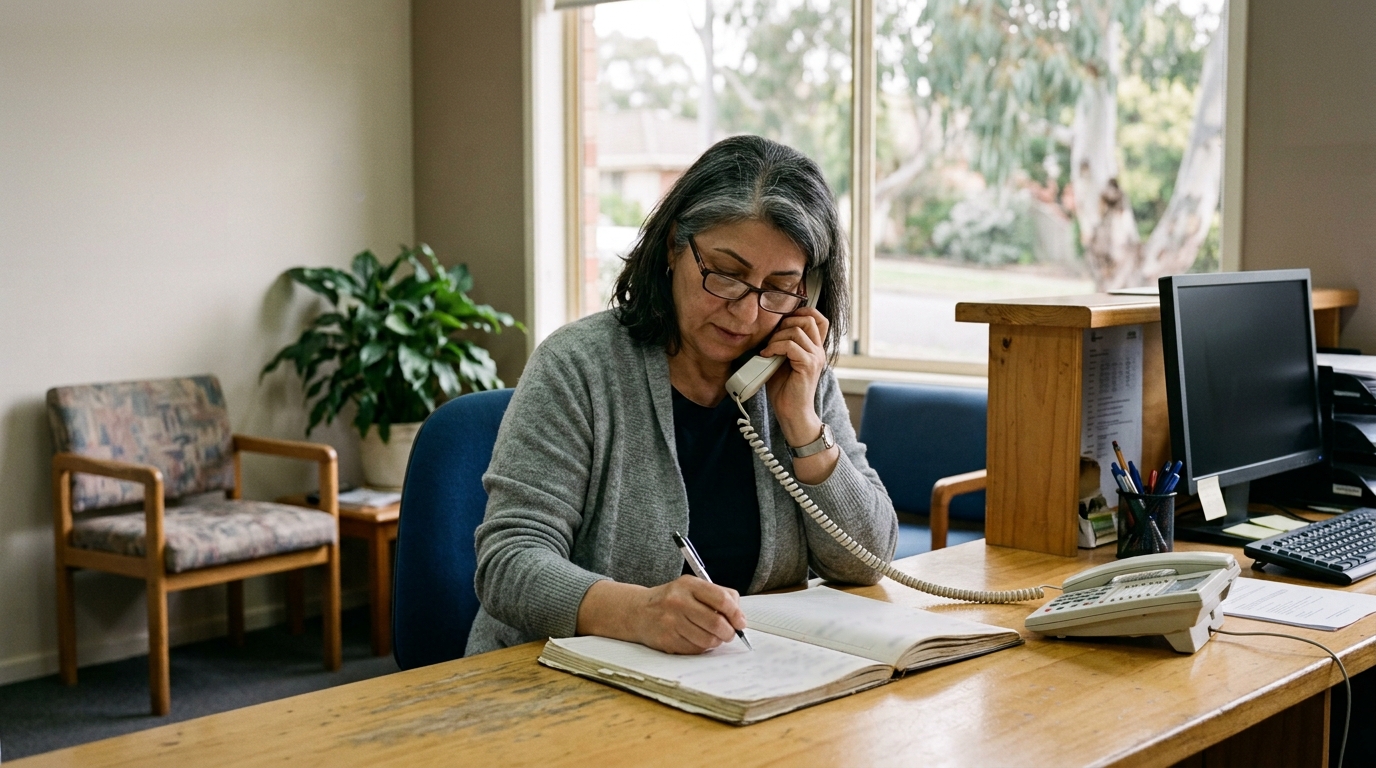 Consent, recordedbefore the first message
 Sources & notes
- Verified. Spam Act 2003 (Cth), Compilation No. 10, authorised version C2016C00614, compilation date 10 March 2016, read in full from legislation.gov.au on 29 August 2026. Section 16 prohibition and evidential burden, section 17 sender information including the 30-day validity requirement, section 18 unsubscribe facility, Schedule 2 clause 6 on the five business days. Schedule 2 clause 4, on published addresses, re-read from the Act’s latest text on 26 September 2026: clause 4(1) says consent may not be inferred from publication alone, and clause 4(2) takes a conspicuously published work address as consent to messages relevant to that person’s work, where it is reasonable to assume it was published with the agreement of that person or organisation and the publication does not say otherwise. Part 3, sections 20 to 22, bars supplying, acquiring or using address-harvesting software or a harvested-address list, read the same day. Every message still carries the sender’s details and a working unsubscribe under sections 17 and 18.
- Verified. Spam Regulations 2021 (Cth), F2021L00285, commenced 1 April 2021, read in full. Regulation 7(6) is the login and personal-information prohibition. Plain-English restatements, including both sentences quoted above, are ACMA’s, from Avoid sending spam, acma.gov.au, page last updated 29 November 2024, re-read 26 September 2026. Do Not Call Register Act 2006 (Cth), Schedule 1 for the exemptions and Schedule 2 clause 3 for the three-month expiry of express consent.
- Verified. ACMA, About the register, acma.gov.au, page last updated 20 July 2026, read 29 August 2026.
- Verified. ACMA media releases and enforcement register, read 29 August 2026. Latitude Finance, 15 April 2026, AU$3,960,000, after more than 2.3 million marketing messages without accurate contact information, 344,416 of which also had no working unsubscribe; second action after AU$1.55 million in 2022. TAB, 22 July 2026, AU$2,758,800 across a telemarketing notice and a spam notice. Lululemon Athletica Australia, March 2026, AU$702,900, verified from ACMA’s register. Infringement-notice caps are Schedule 3 clause 5 of the Spam Act, 1,000 penalty units for a single day’s breaches at a penalty unit value of AU$364 for conduct on or after 1 July 2026.
- Reported, not verified. AIIMS Group, reported by Dynamic Business, 28 August 2026: more than 207,000 inbound calls across 858 client businesses in nine industries, average drop rate 9.2%, flooring 17.9%, roofing 17.6%, pest control 5.1%, solar 1.8%. No date range is given and the underlying analysis is not published; the businesses are one agency’s clients, not a random cross-section.
- Traced by us, 29 August 2026. The “62% of business calls go unanswered” figure, usually dressed as Australian, traces to 411 Locals, a United States local-search vendor, 2024, 85 businesses across 58 industries; the cited page now redirects to the company homepage. The “85% never call back” and “62% contact a competitor” variants trace to PATLive and Dialzara, both American, neither disclosing a sample.
- Published, and not usable. InsideSales.com Lead Response Management Study, 2007, the source of “ring back within five minutes and you are 21 times more likely to qualify a lead”: authored and funded by the vendor, six companies, never peer reviewed, and it measures qualification rather than work won.
- No Australian data exists on after-hours enquiries that we could find, and we looked at ACMA, the ABS, the telcos and the trade platforms. The best available is American, BrightLocal across 45,264 businesses between September 2017 and December 2018: 94% of calls to a typical business arrive Monday to Friday; restaurants are the exception, at 51% after 5pm. On the monthly email, no Australian open or reply rate for a small business list is published by anybody we would cite.
- Verified. Google Ads Help, About audience segments in Audience manager, support.google.com/google-ads/answer/7558048, read 26 September 2026: the Display Network, the Search Network and YouTube each need “a minimum of 100 active visitors or users within the last 30 days” before a segment will serve. The swap is Rory’s ruling of 25 September 2026.
How it works
The Switch‑On Method.
Five steps, the same every time. Switched on inside 30 days.
-
Listen
A free first hour about your business, not about AI. You leave with your insight portal: a private page about your business, your trade and your area.
-
Scope
One page in plain English: what we do, what it costs, what we measure.
-
Build
Set up inside the accounts you already own. Nothing to migrate into.
-
Train
Your people shown how to drive it, on your real work, until it sticks.
-
Measure
At 90 days we measure against day one and show you the before and after.
Why us
Six reasons owners pick us.
A local practice that builds in your accounts, hands everything over, and tells you straight.

We set you up, and it’s yours
We set it up in your accounts, hand over every login, and teach you to change it. You don’t pay us forever.
We pick what fits
No packages. We pick the few things that will make the biggest difference, tell you what’s not worth it, and what you can stop paying for.
It costs less to start
Start from AU$499, with the price in writing before we start. Three months’ support included, then optional at AU$99 a month.
We’re where you are
We’re local. We sit down with you in your business, and you can always reach a real person.
It moves fast
Most things are set up in days or a few weeks.
Someone to ask about AI
Not sure who to ask about AI? Ask us: we’ll tell you straight, and we can set it up.
Included with every paid engagement
One hour with us, in person, on the AI you actually want to ask about.
A free workshop on Claude Code or Codex, for you and whoever you bring. Everything we build afterwards sits on it.
Ask what you actually want to ask
Whether it will replace you, what it gets wrong, what it costs to run. No question is too basic.
Say what worries you
Customer data, staff, the law, sounding like a robot. We go through each one with your business in front of us.
Set the goals for the engagement
The hour a week you want back, the enquiry you keep missing. Written down, then measured.
Learn to drive it yourself
By the end you can ask the machine to change your website, redraft an email or rerun a report.

Questions
The questions people ask before the first call.
If yours is not here, ask it in your free hour.
Can you go after the customers I want most
Yes, the lawful way. A posted letter sits outside the Spam Act, and an email may go to a work address conspicuously published with that person’s agreement, about something relevant to their job and never from a harvested list, and it must still name you and carry a working unsubscribe.
Will it sound like a robot wrote it
Only if you approve wording that sounds like a robot wrote it. The test we use is whether your regulars would notice.
Do I have to write the emails and the posts myself
No. The machine drafts them from your real jobs, in your voice, and you approve them in one sitting.
Is texting my customers legal
It depends on how they got onto the list, and the rules are stricter than most software assumes. Somebody who rang you gave you their number directly, which is the strongest position there is, and we record consent from the first message.
Will you run my Google Ads or my Facebook ads
We plan them, cap them and measure them in accounts that are yours, with the ceiling agreed in writing. We take no percentage of the spend, so we have no reason to grow it.
Is this an AI receptionist
No. A missed call gets a written reply inside a minute, and the conversation carries on by message rather than through a voice pretending to be a person.
Start here, free
Find the work you already won.
An hour about your business, not about AI, and a plain answer on what to fix first.
Or write to hello@getaiworking.com.au, answered by the person who would do the work. What happens after
- Fix the Google profile first
- Check what the AI assistants say
- Pick the one job to hand over
- Your business, checked
- Your trade, compared
- Your area, mapped